I recently spoke with Holley Watkins at Pathway Healthcare, and it didn’t take long to understand that this work is personal for her.
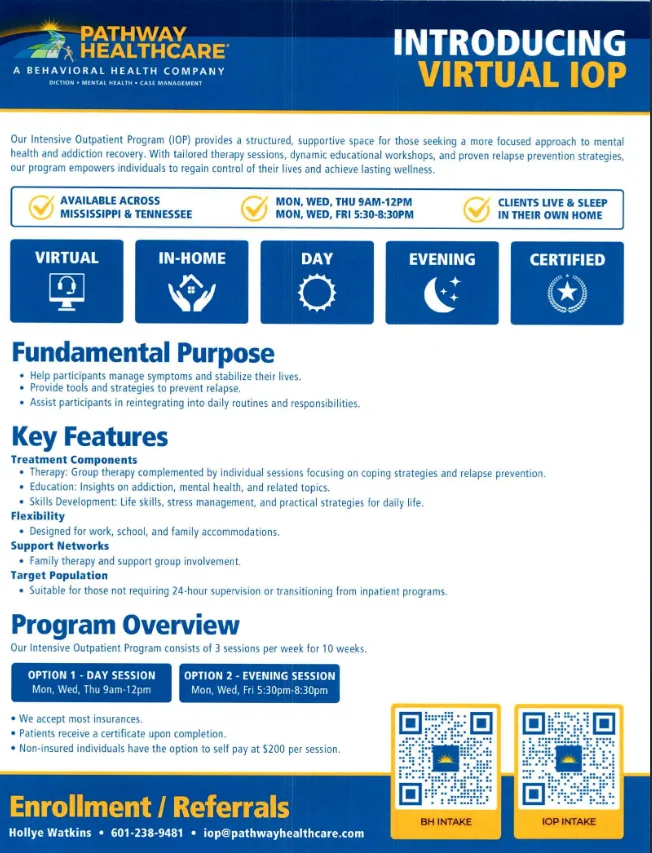
Holley has been with Pathway for five years. She started as a patient care coordinator and now serves as the IOP coordinator. IOP, or Intensive Outpatient Program, is, as she described it, “a group setting, for three days a week for three hours a day,” and works as “basically a step down from inpatient.”
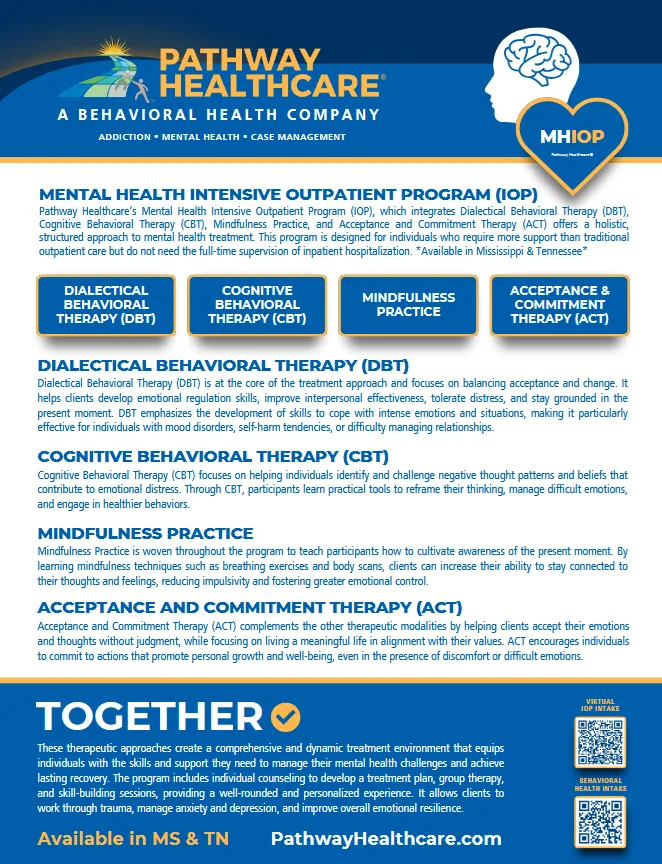
Pathway Healthcare also offers medication management through its MAT program, along with access to psychiatrists, one-on-one counseling, and medical care. But when Holley talks about her work, she doesn’t lead with programs. She leads with people.
“My main thing is I just want the community, and however far I can reach, to know that you have help,” she said. “The stigma is what I’m trying to break.”
Holley explained how fear and embarrassment often stop people from seeking help. “Because of the stigma between mental health and substance abuse,” she said. “It’s considered embarrassing.”
That understanding comes from lived experience.
“I have my own past,” Holley said. “I’ve been where they’re at. I understand what they’re going through.” She described the fear of admitting something isn’t right and the difficulty of functioning while carrying that weight. “I understand going through the mental state that, you know, not only you don’t understand why you’re like this, but also the fear of saying out loud, hey, I have this problem.”
She’s also seen how often addiction and mental health are intertwined. “A lot of people don’t understand that usually substance abuse starts with mental health,” Holley said. “You’re chasing just to feel normal.”
That perspective shapes how she works with patients today. “They want to know that they’re not being judged,” she said. “I have made it my number one goal to make sure no matter who I speak with… to make them feel like I am never judging them, that I’m strictly just trying to help them.”
Over the years, she’s watched real change happen. While she hesitated to put a number on it, in the IOP program, she’s seen patients complete treatment and encourage others to seek help. “That’s usually where it even comes from is word-of-mouth,” she said.
Pathway accepts most insurance plans. “The only thing that we do not take at the moment is Medicare,” Holley said, adding that they’re actively working to change that. Medicaid and most private insurance plans are accepted, and for those without coverage, she works to connect them with options. “If you come through me, I have brokers that I work with,” she said. “I’m going to send you to them to at least try to get insurance.”
One of the biggest challenges, she said, is helping people recognize how much support they need. “A lot of people come in, they get on medications, they do a few counseling situations, and then they walk away,” she said. “And then next thing you know… ‘I’m not okay.’”
Still, Holley’s reason for doing the work never changes. “I’m not in it for the money,” she said. “I’m in it to watch people grow.”
And if there’s one thing she wants people to hear, it’s this:
“You’re worth it,” Holley said. “You’re not damaged goods… You’re worth every bit of help.”
It’s a message she delivers not from a distance, but person to person — the same way she approaches her work every day.
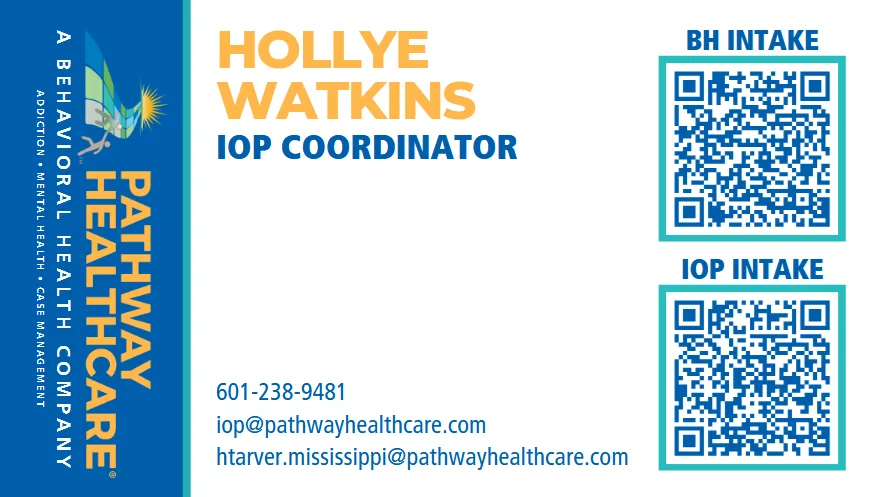
Pathway Healthcare provides behavioral health services across Mississippi and Tennessee and accepts a wide range of insurance plans. In Mississippi, accepted plans include Blue Cross Blue Shield (BCBS), Molina, Ambetter, Wellpoint, WellCare, Magnolia Health, UnitedHealthcare (UHC), Humana, and Cigna Advantage. In Tennessee, Pathway accepts Blue Cross Blue Shield (BCBS), Ambetter, UnitedHealthcare (UHC), Amerigroup, and Humana.
If you don’t see your insurance listed, Pathway encourages you to reach out, as help may still be available. For more information or to ask about coverage, contact Pathway at 601-238-9481 or by fax at 662-657-1044.
 January 19, 2026